Signs Your Air Ducts May Need Repair
Duct problems are not always as obvious as a furnace that will not start or an air conditioner blowing warm air. The system may continue running while losing heated or cooled air behind walls, above ceilings, or beneath the floor. That can leave the HVAC equipment working longer without delivering consistent comfort.
Uneven temperatures are one of the most common warning signs. If the living room feels comfortable but a bedroom remains stuffy, the issue may be a disconnected branch, restricted duct, poor seal, or inadequate airflow. Weak airflow from certain registers, rattling or whistling noises, and excessive dust around vents can also point to ductwork trouble.
Other reasons to schedule an inspection include rising utility costs, visible gaps at duct connections, damaged flexible duct, deteriorated insulation, or musty odors when the system operates. Our technicians look beyond the nearest vent to determine whether the problem is in the ductwork, HVAC equipment, filter, or another part of the system.
What Our Air Duct Repair Service Includes
A proper repair begins with understanding how the entire air distribution system is behaving. We inspect accessible supply and return ducts, connections, fittings, registers, and areas where damage commonly develops. We also consider airflow complaints and the condition of your heating and cooling equipment before recommending work.
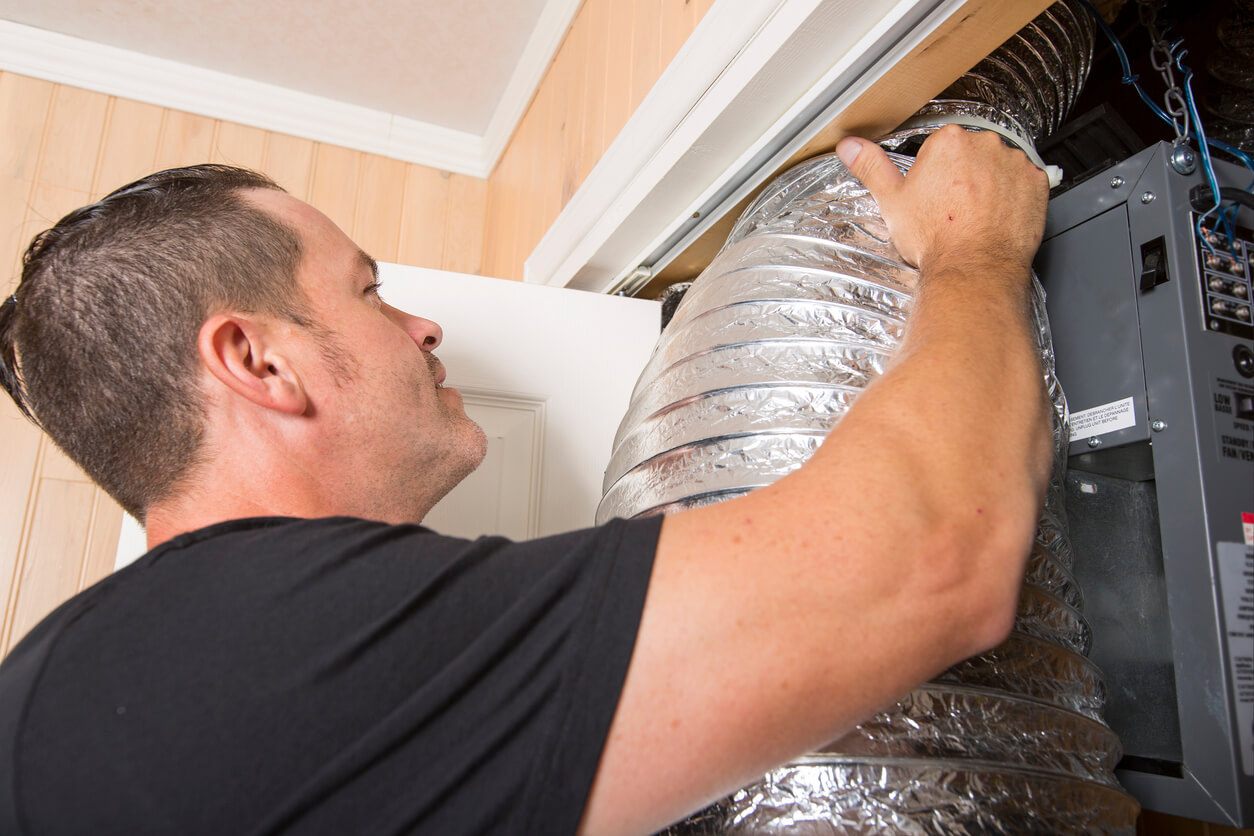
The exact repair depends on the duct material, location, and extent of the damage. Our Allegan County duct repair services may include:
After the repairs are completed, we check the affected area and system operation to confirm that connections are secure and airflow has improved. If we find a separate equipment or indoor air quality issue, we explain it clearly rather than treating every comfort problem as a duct leak.
Our Duct Inspection and Repair Process
First, we listen to what you have noticed. A cold room, a vent that barely moves air, or a sudden noise when the blower starts can provide useful clues. We then inspect the accessible ductwork and evaluate the affected areas instead of applying sealant without identifying the actual failure.
Next, we explain our findings and discuss the most sensible options. Some systems need only a failed connection secured and sealed. Others have damaged sections that should be replaced, especially when flexible duct has collapsed or metal ductwork has significantly deteriorated.
Once the repair plan is approved, our technicians complete the work using materials and methods appropriate for HVAC duct systems. The goal is to create durable connections, reduce unwanted air loss, and restore a clear path from the equipment to the registers and back through the return system.
Before wrapping up, we review the completed work and answer your questions. If ongoing maintenance, additional insulation, or another HVAC service could help prevent future comfort problems, we will let you know without turning a straightforward repair into an unnecessary project.
Repairing Ductwork vs. Replacing It
Not every leaky duct system needs to be torn out. Isolated leaks, separated joints, damaged fittings, and limited sections of crushed duct can often be repaired without replacing the entire network. Targeted repairs can be a cost-effective choice when most of the system remains properly sized and structurally sound.
Replacement may be the better investment when damage is widespread, ductwork is heavily corroded, or the original layout creates persistent airflow problems. We consider accessibility, overall condition, comfort concerns, and the expected value of each option. You receive a recommendation built around the actual system, not a one-size-fits-all sales pitch.
Why Repair Leaking or Damaged Ducts?
Your duct system acts like the road between the HVAC equipment and every room in the building. When part of that road collapses or develops a large opening, comfort gets stuck in traffic. Repairing those trouble spots can improve room-to-room consistency, strengthen airflow, and reduce the amount of conditioned air lost in unfinished spaces.
Duct repairs may also help your furnace, air conditioner, or heat pump operate more effectively. Equipment can struggle when airflow is restricted or when significant leakage prevents air from circulating as intended. Although results depend on the system and extent of the damage, a sound duct network supports better comfort, efficiency, and HVAC performance.