Should you cover your AC unit in the winter? A full wrap does more harm than good. A breathable cover over the top only, or an open-sided shelter, can help in a few situations, and a heat pump should never be covered.
Every fall in West Michigan, the air conditioner goes idle and the furnace takes over. Then the big metal box outside starts to look a little cold, and plenty of homeowners catch themselves thinking, should I cover my AC unit in the winter? Your unit was built to handle snow and cold on its own. A bit of care in the fall does far more for it than a tarp does, and the sections below walk through what works, what to skip and how to decide for your own yard.
Your Outdoor AC Unit Is Built to Sit Out a Michigan Winter
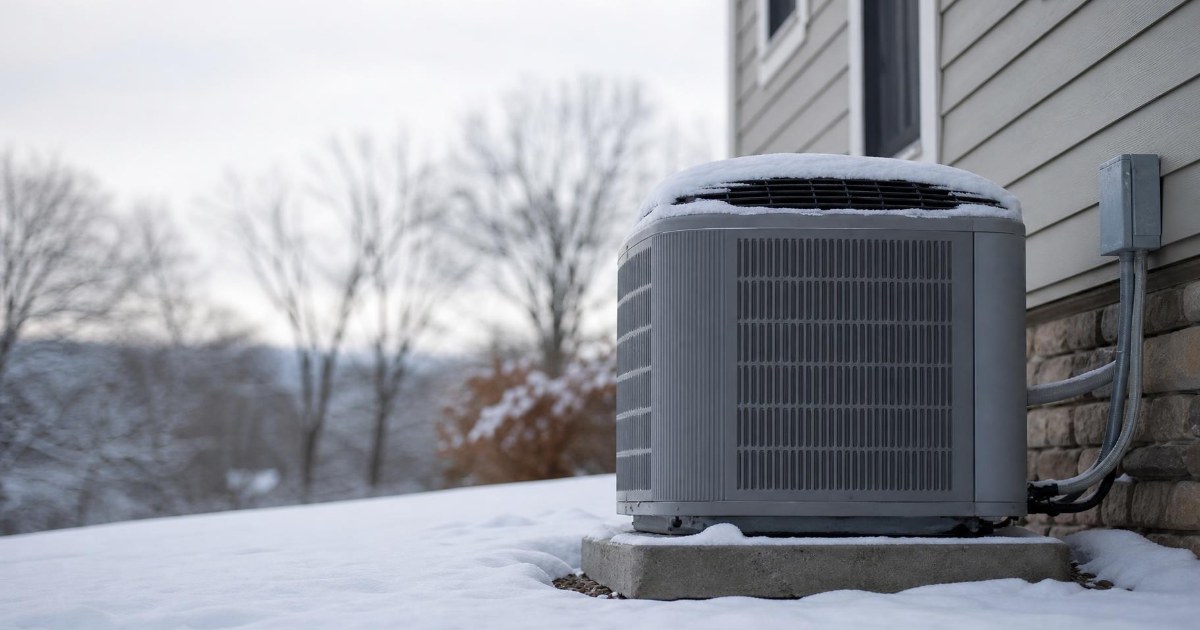
The outdoor half of your central air conditioner is called the condenser, and it is designed to sit outside all year long. The cabinet is made from weather-resistant metals with protective finishes. The electrical parts are sealed, and the cabinet is built to let rain and melting snow drain out. When the system rests for the season, snow on the cabinet simply melts and drains away.
West Michigan puts that design to a real test. Grand Rapids gets a normal 77.6 inches of snow each winter, and lake-effect bands can stack it up quickly. During the January 2026 arctic outbreak, Allegan County saw lows of minus 22°F at Plainwell, Hopkins and Dorr, along with wind gusts up to 47 mph. Deep cold snaps like that arrive in the same season as heavy snow, and the unit sits through both.
Then come the midwinter thaws. Michigan's January thaw typically brings about five days near January 25 with temperatures roughly 10°F above normal, and the water that melts off your unit refreezes when the cold returns. Across the Great Lakes region, stations average about 42 freeze-thaw cycles per year. Because outdoor units are made for this kind of back and forth, your condenser handles a Michigan winter without any help from a cover.
What Can Go Wrong Under a Full AC Cover
Covering your AC unit in winter with a plastic or vinyl wrap seals moisture in around the equipment. Grand Rapids averaged 71 percent relative humidity in 2024, so there is plenty of damp air to get trapped. That moisture sits against the coil and the cabinet and leads to rust and corrosion. It can settle on electrical parts, and a dark, damp space is exactly where mold and mildew grow.
Water held under a cover also freezes and thaws again and again through a West Michigan winter. Each time it freezes it expands, and that repeated pressure is hard on the metal and the connections it touches. A bare unit sheds water and dries out. A wrapped unit holds it.
A snug cover also makes a cozy shelter. Rodents look for protected spaces as the weather cools, and an estimated 21 million U.S. homes get invaded each winter. A wrapped condenser gives mice a quiet place to nest, and they often chew the wiring nearby. A chewed wire can turn into a repair bill the first time you switch the system on in spring.
Two more practical risks come with a full cover. Because some manufacturers say a cover may affect the warranty, your owner's manual is the first place to look before you buy one. And a cover that stays on after winter blocks airflow the first time the AC starts. A condenser starved of airflow works harder to do its job, and a cover is easy to forget when a warm April weekend arrives without warning.
Never Cover a Heat Pump in Winter
A heat pump works differently from a straight air conditioner. Its outdoor unit runs all winter long, pulling heat out of the outside air and sending it indoors to warm your home. A cover blocks the airflow the unit needs for that job and interferes with its defrost cycle.
Some things you see on a working heat pump are normal. Frost forms on the coil when it drops below 32°F, and the unit melts it off with a defrost cycle that typically lasts 5 to 15 minutes. You may see steam rise from the cabinet while it does. None of that calls for a cover.
There are a few simple things you can do yourself. Brush snow off the top and sides with a soft broom, and keep the area around the unit clear of drifts, leaves and stored items. Watch for drip from the roof above, because water running off a roofline can freeze and encase the unit in ice. A raised snow stand helps in cold climates, and shielding the unit from roof snow through its placement keeps the load off the top. If the unit seems stuck in defrost or is covered in ice, that is the time to bring in a professional.
ACR provides heat pump installation and maintenance for homes in West Michigan, including scheduled inspections that keep the system running smoothly through the coldest months.
When a Cover Makes Sense, and How to Use One Safely
A few situations make some protection on top worth the effort. Overhanging trees can drop leaves, seeds and small branches into the unit. A condenser under a roof edge or eave takes snow and ice sliding or dripping onto it. A unit beside a driveway or walkway collects salt spray and plowed snow. A major ice storm in the forecast is also a good reason to protect the top for a few days.
When one of those fits your yard, the right outdoor AC unit cover sits over the top only. A breathable mesh or vented cover keeps debris off while air moves freely around the sides. A board, such as plywood, secured firmly on top of the unit does the same job. For a unit under a roofline, a permanent awning is the best long-term answer. Building science guidance says an awning should be open on the sides, sit at least two feet above the unit or as the owner's manual specifies, and use a roof pitch between 6/12 and 12/12 in snowy areas so snow slides off.
Preparation matters as much as the cover itself. Clean leaves and debris off the unit first, so nothing damp gets shut in. Turn off power at the outdoor disconnect before you put anything on or around the unit. If you shop for an AC unit cover for winter, look for a top-only design in mesh or vented fabric.
Take any cover off before the first warm day of spring. A reminder on your phone or calendar keeps it from staying on when the AC starts up.
Better Ways to Protect Your AC Over the Winter
The steps that protect your unit most start in the fall. Clear leaves and debris from the cabinet and the fins, and trim plants back so air can reach the unit from every side. A clean, open unit goes into winter in far better shape than a covered one.
After big storms, take a look at the unit. Brush snow and ice off gently with a soft broom, and let stubborn ice melt on its own, because chipping at it can damage the fins and the coil. Check where your gutters and downspouts empty, and steer roof runoff away from the unit so water cannot drip and freeze onto the cabinet.
Professional maintenance finishes the job. Because dirty condenser coils make the system run longer and airflow problems can reduce efficiency by up to 15 percent, ENERGY STAR recommends having a contractor check the cooling system each spring. ACR's cooling maintenance service includes a system inspection, refrigerant level checks, a look at electrical connections and lubrication of moving parts, and coil cleaning is one of the tasks that keep a system efficient. Homeowners who want that routine on the calendar every year can look at service agreements that include priority scheduling for maintenance and repairs.
Leave the AC uncovered or protect only the top, never wrap a heat pump, and put your effort into fall cleanup and a spring tune-up. ACR Heating & Cooling is a family-owned, independent Trane Comfort Specialist dealer based in Shelbyville, Michigan, serving homeowners in Allegan, Wayland and nearby West Michigan communities. If you have questions about your outdoor unit or want a tune-up on the calendar, send us a message through our Contact Us page and our team will help you get set up.