When a home air conditioner stops working, the household is uncomfortable. When a commercial HVAC system fails, the problem can spread through the entire business. Customers leave sooner, employees struggle to work, temperature-sensitive products may be damaged, and normal operations can grind to a halt.
Knowing what to check before requesting commercial HVAC repair can help you explain the problem, evaluate your options, and avoid making an expensive decision under pressure. You do not need to diagnose the equipment yourself. You simply need to recognize when a minor issue is turning into a threat to your building and business.
Why “Just Fix It” Isn’t as Simple as It Sounds
Commercial heating and cooling affects much more than the number displayed on a thermostat. An uncomfortable retail store can lose foot traffic. An overheated office may have employees working slowly or moving elsewhere. A restaurant can face dining-room complaints while also worrying about kitchen ventilation and refrigeration equipment. If temperature conditions become severe, parts of a facility may not be usable at all.
There is no honest, one-size-fits-all cost-per-hour estimate for HVAC downtime. The actual cost depends on your facility, staffing, inventory, lease obligations, and customers. However, the bill may include lost sales, wages paid during idle time, damaged stock, rushed repair expenses, and friction between property owners and tenants. Businesses with temperature-sensitive inventory may also need to consider their commercial refrigeration separately from comfort cooling.
The effect on employees matters too. OSHA recommends maintaining workplace temperatures between 68°F and 76°F. Although every workplace is different, that range provides a useful benchmark. A building that drifts well beyond it is not merely inconvenient; it can affect concentration, productivity, and safety.
HVAC is also one of a commercial building’s major energy demands. According to the U.S. Energy Information Administration, space heating accounted for approximately 32% of energy use in commercial buildings in its 2018 survey, making it the largest individual end use. A malfunctioning HVAC system can therefore hurt twice: first through disrupted business operations and again through rising energy costs.
Signs Your Commercial HVAC System Needs a Call Now, Not Next Week
Commercial equipment rarely chooses a convenient time to fail. A rooftop unit may keep limping along until the first hard freeze or hottest afternoon of July, when every HVAC service schedule in West Michigan is already filling quickly. Recognizing the warning signs gives you a chance to act before the building becomes unusable.
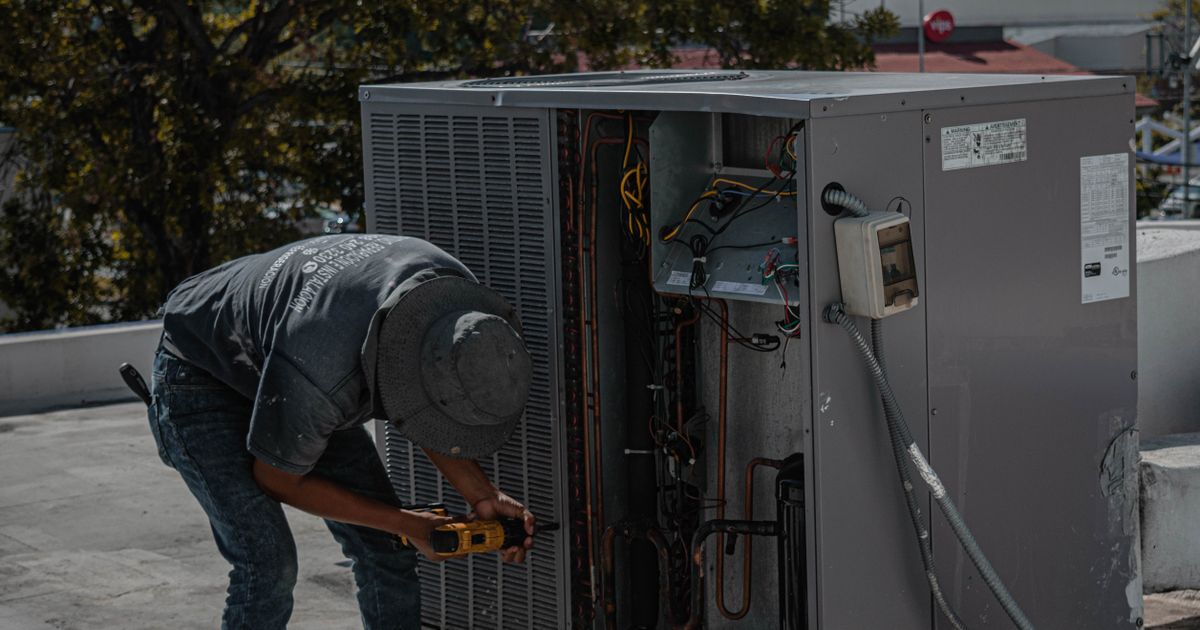
Before calling, note which areas are affected, when the problem started, and whether anything recently changed. Those observations help a technician narrow down the issue, but they are not a substitute for professional diagnostics. Electrical panels, refrigerant circuits, burners, and rooftop equipment should be left to trained commercial technicians.
1. Grinding, Squealing, Banging, or Other New Noises
Grinding or squealing can point to worn bearings, belts, or motor components. Banging and rattling may indicate a loose part, damaged fan assembly, or debris inside the equipment. Even if the HVAC system is still producing heated or cooled air, a new mechanical noise deserves prompt attention.
Continuing to run the unit may turn one damaged component into several. Shut the system down if the sound is severe or accompanied by smoke, a burning smell, or violent vibration, then request commercial service rather than waiting for the noise to disappear on its own.
2. A Sudden Increase in Energy Costs
A higher utility bill does not automatically mean the HVAC equipment is failing. Weather, occupancy, operating hours, and rate changes can all affect energy costs. But if usage spikes without another clear explanation, the system may be running longer or working harder to maintain the same temperature.
Dirty coils, airflow restrictions, failing motors, control issues, and refrigerant problems can all reduce efficiency. Comparing current bills with the same period last year can help reveal a trend. Timely HVAC service may correct the underlying problem before it causes a complete breakdown.
3. Uneven Temperatures Across the Building
One office feels like a freezer while the conference room stays stuffy. The sales floor is comfortable, but the stockroom never reaches the thermostat setting. These differences can indicate airflow restrictions, thermostat or sensor issues, duct problems, failing zone controls, or trouble with a VAV system.
Uneven temperatures also create a temptation to keep changing the setpoint. That can make the equipment run harder without correcting the actual fault. Document which rooms are affected and when; this information is especially valuable when the problem appears only during busy hours or certain weather conditions.
4. Short-Cycling or Failure to Hold the Setpoint
Short-cycling occurs when equipment starts and stops repeatedly instead of completing a normal heating or cooling cycle. The cause could be relatively straightforward, such as a control or airflow problem, but repeated starts place extra strain on compressors, motors, and electrical components.
An air conditioner that runs continuously without reaching the setpoint also needs commercial AC repair. The cooling system may have lost capacity, developed a refrigerant issue, or encountered restricted airflow. During cold weather, the same pattern may indicate the need for commercial furnace repair or boiler service.
5. Ice, Leaks, or Unexplained Moisture
Ice on air conditioning lines or coils is not proof that the cooling system is working especially hard. It commonly signals inadequate airflow, a refrigerant problem, or another condition preventing normal heat transfer. Continuing to operate frozen cooling equipment can lead to compressor damage and a larger commercial AC repair bill.
Water around an indoor unit may come from a blocked drain, damaged drain pan, frozen coil, or condensate problem. Even a small leak can damage ceilings, flooring, inventory, and indoor air quality if it is ignored. If water is close to electrical equipment, keep people away and call for assistance.
Repair or Replace: What to Weigh Before You Decide
Not every breakdown justifies a new system. A repair may be the practical choice when the equipment is relatively young, the problem is isolated, and the rest of the unit remains in sound condition. Replacement becomes more compelling when one repair is only buying time until the next component fails.
The technician should provide findings and options, but the final decision is a business decision. Consider the age and history of the equipment alongside your operating schedule, budget, and tolerance for another outage.
Four Questions to Ask Before Authorizing the Work
First, how old is the unit? ASHRAE service-life information commonly places packaged commercial rooftop equipment at roughly 15 years of median service life, although maintenance, usage, installation quality, and operating conditions can move that number in either direction. A 15-year-old unit is not automatically finished, but age changes the repair math.
Second, how often has the system needed attention? The first repair in several years is different from the fourth HVAC service call in one season. Review invoices for repeated motor, refrigerant, electrical, or control problems. A string of unexpected repairs may indicate that the system is declining as a whole.
Third, how does the repair cost compare with the remaining value and likely replacement cost? There is no universal percentage that makes the decision for every business. Ask whether the proposed work restores dependable operation or merely keeps worn commercial HVAC equipment running temporarily.
Finally, can your business tolerate another outage this season? A retailer approaching the holidays, a restaurant entering summer, or a facility facing a West Michigan cold snap may place a higher value on reliability. If replacement makes sense, ask about sizing, energy efficiency, scheduling, and the disruption involved in commercial HVAC installation before selecting a new system.
What a Commercial HVAC Repair Call Should Actually Include
A properly run call begins with diagnostics, not a guess and a parts list. The technician should ask about the symptoms, review the controls, inspect the relevant equipment, and test the system before recommending repair or replacement. You should receive an understandable explanation of what failed and why the proposed work is appropriate.
Commercial buildings also require experience beyond residential heating and air conditioning. Rooftop units, split systems, VAV systems, boilers, chillers, exhaust and supply fans, and make-up air units can involve different controls, loads, access requirements, and ventilation needs. The contractor does not need to drown you in jargon, but the team should be familiar with the equipment serving your facility.
What to Expect From Commercial HVAC Contractors
Verify that the contractor is appropriately licensed and insured for the work being performed. Ask whether the company regularly handles commercial HVAC services and whether its technicians have experience with your equipment category. A residential-only provider may be excellent at home systems while lacking the tools or background needed for commercial facilities.
Clear communication should continue after the diagnosis. A reputable provider should explain the scope of work, pricing, parts availability, and any limitations before work starts. If replacement or commercial HVAC installation is recommended, ask what evidence supports that recommendation and whether a reasonable repair option exists.
ACR Heating & Cooling provides commercial HVAC services for businesses across Allegan County and the surrounding West Michigan service area. Its commercial team works with rooftop units, split systems, boilers, chillers, VAV systems, ventilation equipment, and make-up air units. That range matters when a problem involves more than a familiar residential-style air conditioner.
Commercial service should also account for how the facility operates. A good technician will want to know when the building is occupied, which areas are essential, whether exhaust or ventilation must remain active, and how shutdown time affects customers and employees. The goal is not merely to make the unit turn on; it is to restore dependable operation safely and efficiently.
Preventive Maintenance: The Cheaper Way to Avoid This Call
The least disruptive commercial HVAC repair is the one caught before the system stops. Scheduled maintenance allows technicians to identify worn belts, dirty coils, drainage problems, loose electrical connections, airflow restrictions, and other HVAC issues while there is still time to plan the work. It also creates a service history that makes future repair-or-replace decisions more informed.
Preventative maintenance cannot eliminate every failure, but it can reduce surprise breakdowns and help equipment operate closer to peak performance. Maintenance services may also protect energy efficiency by keeping heat-transfer surfaces, filters, fans, and controls in working order.
Federal Energy Management Program cost data has compared reactive maintenance at roughly $18 per horsepower per year with preventive maintenance at approximately $13 per horsepower per year. That is about a 1.4-times difference, not the inflated three-to-five-times claim often repeated online, but still a meaningful cost gap for facilities with multiple or larger units.
A useful maintenance plan should reflect the equipment, occupancy, operating hours, and seasonal demands of the building. For many West Michigan businesses, scheduling service before peak heating and cooling seasons provides time to address small problems without making decisions during an emergency.
Get Ahead of the Next Outage
If your system is making new noises, short-cycling, leaking, struggling to maintain temperature, or driving up energy costs, waiting rarely makes the decision easier. Record what you are seeing, check your recent service history, and arrange an inspection before the equipment controls your business schedule for you.
ACR Heating & Cooling offers commercial HVAC services for West Michigan businesses, including repair, installation, and preventative maintenance plans. Contact the team at (616) 681-9221 to discuss your facility, schedule commercial service, and take the next step toward reliable heating, cooling, and ventilation.